
Künstlerische Installationen handeln von den Beziehungen zwischen Objekten, Klängen und Projektionen. Sie sind Teil einer lebendigen Aufführungspraxis, in der Künstler*innen und Betrachter*innen den Raum immer wieder neu erfahren und konstruieren.
Die Installation als Mittelpunkt und Quelle dieser Transformationsprozesse ist Herausforderung und Angebot zugleich: In ihrer Konfiguration weist sie eine Vielzahl von künstlerischen Techniken und Strategien auf, in ihrer Form ist sie ein komplexes sensorielles Angebot an die Betrachter*innen.
In diesem Seminar experimentieren wir mit Materialien und Immaterialien, mit Gefundenem, Angeeignetem und Gemachtem, in individuellen und kollaborativen Handlungsräumen, und den jeweils entsprechenden Techniken. Teil der Praxis wird das Vorstellen und Diskutieren künstlerischer Arbeiten sein. Am Ende soll eine gemeinsame Rauminstallation entstehen. Der Aufbau findet vom 22.-24. Juni statt. In dieser Woche muss mit einem höheren zeitlichen Aufwand gerechnet werden.
Literaturempfehlungen:
− Claire Bishop, Installation Art
− Ilya und Emila Kabakov, Über die „totale“ Installation
− Faye Ran, A History of Installation Art and the Development of New Art Forms
− Juliane Rebentisch, Ästhetik der Installation
- Teacher: Pascal Dreier-Wang
- Teacher: Ute Hörner
- Teacher: Amelie Vierbuchen
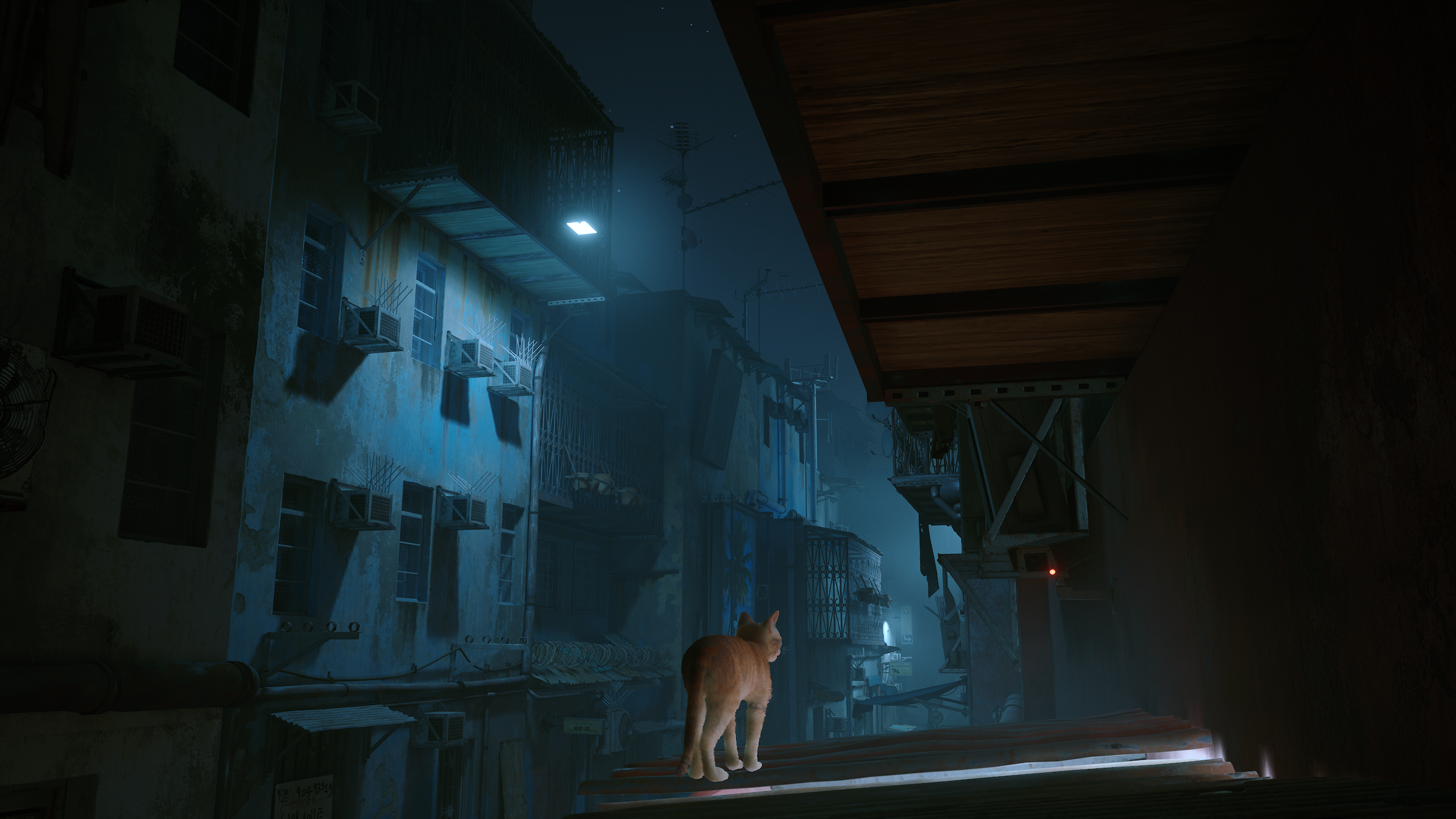
Animals are ubiquitous in digital landscapes, appearing in video games, movies, and art as both familiar companions and distorted abstractions. In this seminar, we will investigate virtual animals not merely as digital assets, but as complex sites of mediation and technization. From the lively drawings in Lascaux through taxidermized (digital) bodies to the motion-captured data-bodies of contemporary media such as video games, animals are scanned, drawn, modeled, conjured, written, captured. Though they often serve as anthropocentric mirrors rather than being recognized in their own right, individual (virtual) lifeforms can – at times – emerge as representatives of liveliness and more-than-human agency in virtual environments.
After establishing a foundation through the study of virtuality and animality – drawing from critical animal studies and media studies, among others – we will explore these topics through critical making and play. Furthermore, colloquium sessions will provide a space to discuss student projects involving virtual lifeforms and related themes.
The texts we are reading for this seminar are in English and German, and so knowledge of English as well as German is a requirement for this seminar. Discussions and work performed for this seminar can be in English or German.
Guests
- Jana Kerima Stolzer, Dr. Yvonne Volkart, Prof. Dr. Alexandra Toland
(Veranstaltung mit dem Medienwerk NRW im Rahmen des Stipendiums des Landes Nordrhein-Westfalen für Medienkünstlerinnen) - Prof. Dr. Martin Ullrich und Dr. Pascal Rudolph,
Interdisziplinäre Musikforschung mit Schwerpunkt Human-Animal Studies, Hochschule für Musik Nürnberg - Nieves de la Fuente, Artist, Cologne
- Prof. Dr. Thomas Hawranke, Motion Design und VR, BURG Giebichenstein Kunsthochschule Halle
- Dr. Peter Podrez, Game Studies & Medienwissenschaftliche Human-Animal Studies sowie Mediale Fantastik, Institut für Medienkultur und Theater der Universität zu Köln
Excursions
Multispecies Methods Workshop, University of Liège, 6–8 July 2026;
The Hague (12–18 April 2026), no spaces available anymore.
Selected Reading
Bolinski, Ina, Thomas Hawranke, and Stefan Rieger, eds. Virtuelle Tiere. Lebewesen zwischen Code und Kreatur. 1. Auflage. Transcript, 2024.
DeMello, Margo. Animals and Society: An Introduction to Human-Animal Studies. Columbia University Press, 2012.
Philo, Chris, and Chris Wilbert. Animal Spaces, Beastly Places: New Geographies of Human-Animal Relations. Critical Geographies 10. Routledge, 2000.
Tyler, Tom. Game: Animals, Video Games, and Humanity. University of Minnesota Press, 2022.
Ullrich, Jessica, and Stefan Rieger, eds. Tiere und / als Medien. Tierstudien 18. Neofelis Verlag, 2020.
Ullrich, Jessica, and Aline Steinbrecher, eds. Tiere und Unterhaltung. Tierstudien 9. Neofelis, 2016.
Ludography
Red Dead Redemption II. Rockstar Studios. Rockstar Games, 2018.
Stray. BlueTwelve Studio. Annapurna Interactive, 2022.
The Last Guardian. Japan Studio and genDESIGN. Sony Interactive Entertainment, 2016.
- Teacher: Pascal Dreier-Wang
- Teacher: Ute Hörner
- Teacher: Amelie Vierbuchen

DER SCHLÜSSEL ZUM OZEAN / THE KEY TO THE OCEAN — Aquascaping, Lockpicking und Bonsai-Aufzucht / and bonsai cultivation
Fachseminar Prof. Monika Rinck & Prof. Tina Tonagel
Heumarkt 14, T8.08
Wir richten unseren Blick auf skalierte Welten, kleine Formen, auf Essenzen, Modelle und andere hochkonzentrierte Miniaturen. Was passiert, wenn Dinge ihre Größe verändern? Was verbinden wir mit Monument und Miniatur? Wie sieht der Übergang vom Niedlichen zum Monströsen aus? Ausgehend von der Disziplin des Aquascaping, der ästhetischen Gestaltung von Aquarienlandschaften, untersuchen wir natürliche und künstliche Landschaften.
We focus our attention on scaled worlds, small forms, essences, models, and other highly concentrated miniatures. What happens when things change size? What do we associate with monuments and miniatures? What does the transition from cute to monstrous look like? Starting from the discipline of aquascaping, the aesthetic design of aquarium landscapes, we examine natural and artificial landscapes.
- Teacher: Simon Baptist
- Teacher: Yue Cao
- Teacher: Elsa Ebeling
- Teacher: Yifan Feng
- Teacher: Jiyoung Hong
- Teacher: Dirk Hornschuch
- Teacher: Yubing Ji
- Teacher: Xiaoyu Jia
- Teacher: Mateja Kardelis
- Teacher: Yejin Kim
- Teacher: Lin Liu
- Teacher: Ahona Mukherjee
- Teacher: Laura Müller-Hennig
- Teacher: Samuels Ozolins
- Teacher: Jung Eun Park
- Teacher: Maja Rieß
- Teacher: Ronja Sandtner
- Teacher: Tina Tonagel
- Teacher: Hannah Uszball
- Teacher: Yeling Xi
Grundlagenseminar — Juliana Kálnay
Heumarkt 14, R.1.06 (Seminarraum 1)
In diesem Seminar beschäftigen wir uns mit unterschiedlichen Erzählverfahren in der Prosa. Dabei wollen wir Plot und Setting, Stil und Erzählhaltungen, Perspektiven und Figurenbeschreibungen näher untersuchen: Wie ist ein Text dramaturgisch aufgebaut und welcher Mittel bedient er sich dabei? Wer spricht zu wem und warum? Was unterscheidet personale von auktorialen Erzählperspektiven? In welchem Verhältnis stehen Erzählzeit und erzählte Zeit? Konstituiert sich eine Geschichte anhand ihrer Figuren? Was macht eine Figur zu einer Figur? Und wie verortet man sie in Zeit und Raum? Wie erzeugt man Spannung? Kann man auch ohne Plot erzählen? Und wie findet man den Ton, der zur jeweiligen Erzählung passt? Ausgehend von Beispielen aus Literaturgeschichte und -gegenwart und anhand von kleineren und größeren Schreibaufgaben werden wir uns im Seminar diesen Fragen stellen und in gemeinsamen Diskussionen einen kritisch-konstruktiven Umgang mit eigenen und fremden Texten üben.
____
While most of the (brief) readings are in German, writing assignments can be written and discussed in German or English.
____
- Teacher: Juliana Kalnay